15 Minutes
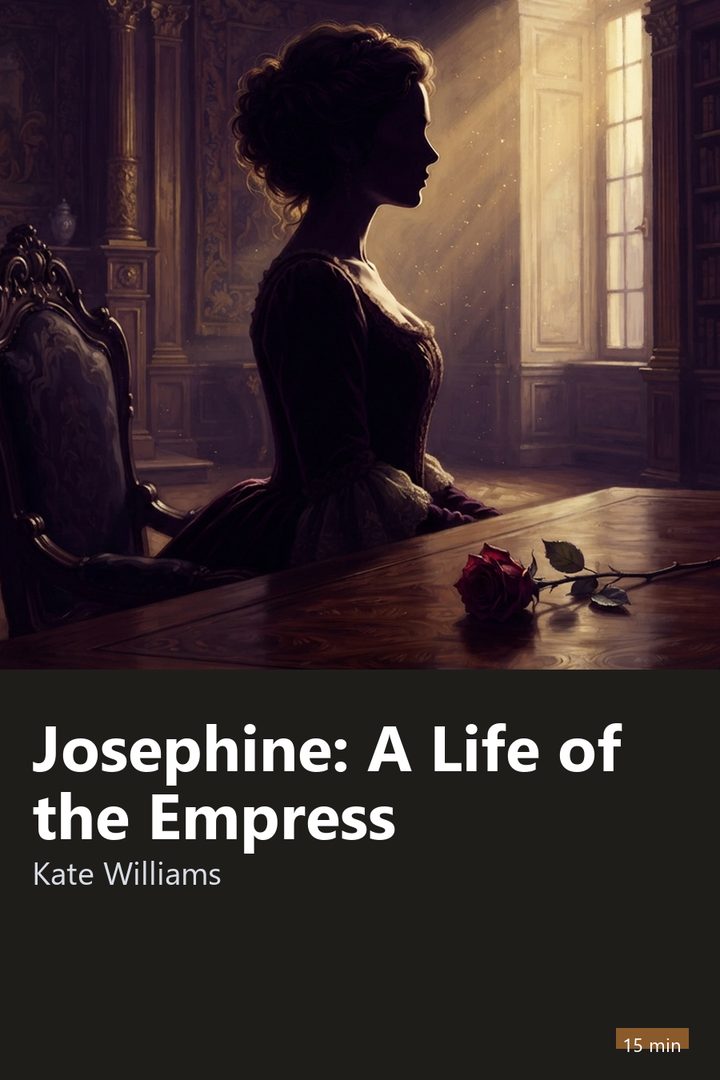
Cover of Josephine: A Life of the Empress

Biographies and Memoirs · 14 min

Josephine: A Life of the Empress

Kate Williams · 2013

Who it's for

Original title (Portuguese): Josefina. For readers who like history told through people and want to understand the French Revolution and Napoleon's empire through one woman's life. It is a biography of Josephine, Napoleon's wife, not a novel.

Read it in the app

⚡ Free to download • 🎁 One full book free every day

🎧 Audio coming soon in the app

Narration for the English summaries is on its way. Meanwhile you can read the full summary in the app.

3 ideas to take with you

1

Learning the social codes of a new environment, with discipline and without fanfare, can open doors that money alone cannot.

2

For the biography, Josephine's spending was a shield against the dread of going back to poverty, a reminder that a lot of spending decisions come from insecurity.

3

Mass-market biographies gain in readability and lose in certainty, so it is worth checking other sources before accepting the dramatized version.

“
People who change worlds have to learn the social language of the new place fast, and that is work too.
An idea from Josephine: A Life of the Empress, in the words of 15 Minutes

Preview

Start reading now

A Girl from Martinique

The woman the world knew as Josephine was born in 1763 under another name: Marie-Josèphe-Rose Tascher de La Pagerie, and at home she was simply Rose. She came into the world in Les Trois-Îlets, Martinique, a French island in the Caribbean, in a family of small landowners who lived off sugar. She was a Creole, that is, the daughter of French parents born in the colony.

Kate Williams's biography points out that the plantation world rested on the labor of enslaved people, and that the family's wealth depended on that system. Money was unstable: hurricanes, debts, and parents who were poor at managing the estate kept the household squeezed, despite the family name.

Rose grew up free, close to the sea and the trees, with little formal education. She sang, danced, and had charm, and the book suggests that much of what she did later came from that mix of natural appeal and an urgent need for financial security.
The Arranged Marriage and the Trip to Paris

In 1779, at sixteen, Rose crossed the Atlantic to marry Viscount Alexandre de Beauharnais, a young nobleman from a wealthy family. The original bride had been a younger sister, who died before the voyage, and Rose took her place. The union was treated by aunts, uncles, and parents as a deal between families, not a love story.

The first years were hard. Alexandre was vain, a womanizer, and irritated by his wife's lack of education, which came from growing up in a colony. She had two children, Eugène and Hortense, who would be the people closest to her for the rest of her life.

The marriage ended in legal separation in the mid-1780s. Rose, still very young, was left with her position as viscountess, a pension, and the lesson that a woman without money of her own depended on other people's decisions.

Learning the Codes of the Court

Separated, Rose did not go home. She stayed in Paris and began to study, methodically, what she lacked: how to speak, how to dress, how to make conversation, how to choose useful friends. She frequented salons, learned to listen, and made each person she talked to feel like the most important one in the room.

The book describes this as an education built on sheer observation. Rose had no higher title and no fortune, but she developed a calm grace, a soft voice, and a special talent for making people feel good. In settings dominated by those with pedigree, that skill was currency.

It is an interesting point for anyone thinking about migration and reinvention. People who change places and social class usually need to learn a new social language fast, and Rose did it with discipline and without fanfare.

10 more sections and the quiz

Continue in the app

Read the whole summary, finish with the Josephine: A Life of the Empress quiz and follow the guided Journeys. No ads in the app.

About Kate Williams

Kate Williams is a British historian and writer, a university professor, and a frequent commentator on TV history programs. She has written biographies of women from the past, such as Emma Hamilton and the young Queen Victoria. She has also published historical novels and helped bring public history to a wider audience in her country. Josephine is one of her best-known works.

Explore

Part of the Journeys:
Women Who Changed the World