1. A System That Cut Across Society
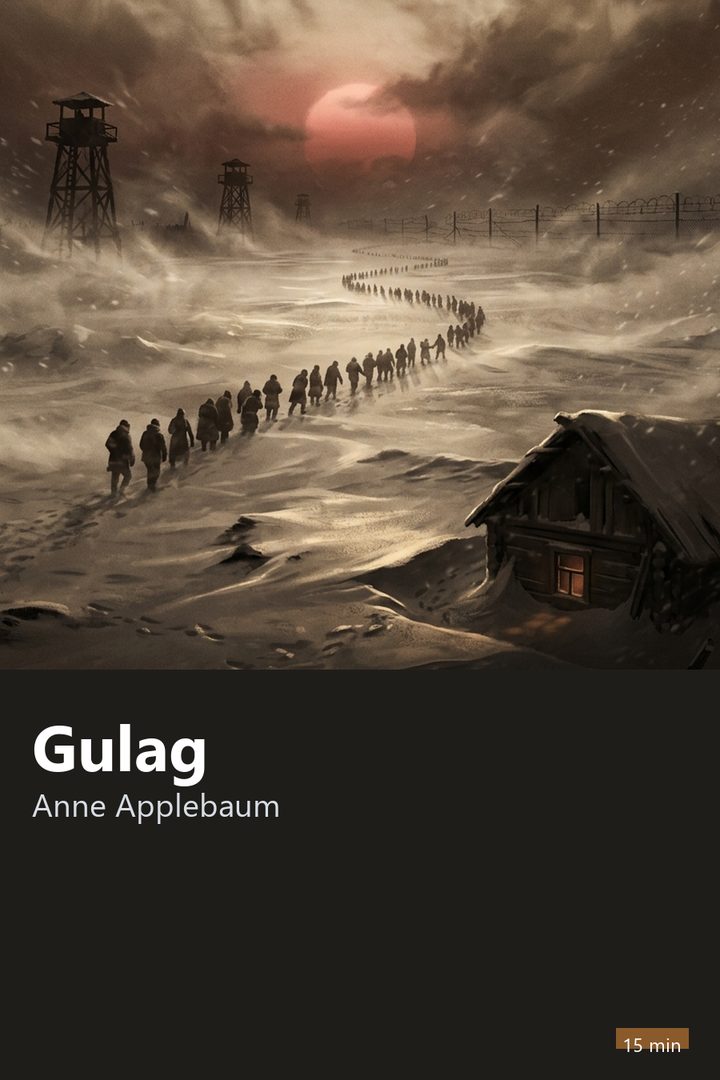
In Gulag, Anne Applebaum reconstructs the formation, operation, and legacy of the Soviet forced labor camps. The name originally designated a state agency, but it came to represent an entire network of camps, penal colonies, and experiences of imprisonment. The book combines documents, memoirs, and interviews to show how political decisions turned into starvation, displacement, and exploitation. Its subject is not just individual suffering: it is the public organization that made that suffering possible.
The central question is not limited to finding out who ordered each atrocity. Applebaum investigates how repression acquired facilities, budgets, employees, and economic utility. This shifts our attention from the isolated ruler to a structure of distributed responsibilities. For the everyday reader, the useful comparison is not equating any government office with a camp. It is realizing that seemingly neutral forms can execute violent decisions when rights stop limiting the power of the people filling them out.