1. A musical revolution built on encounters
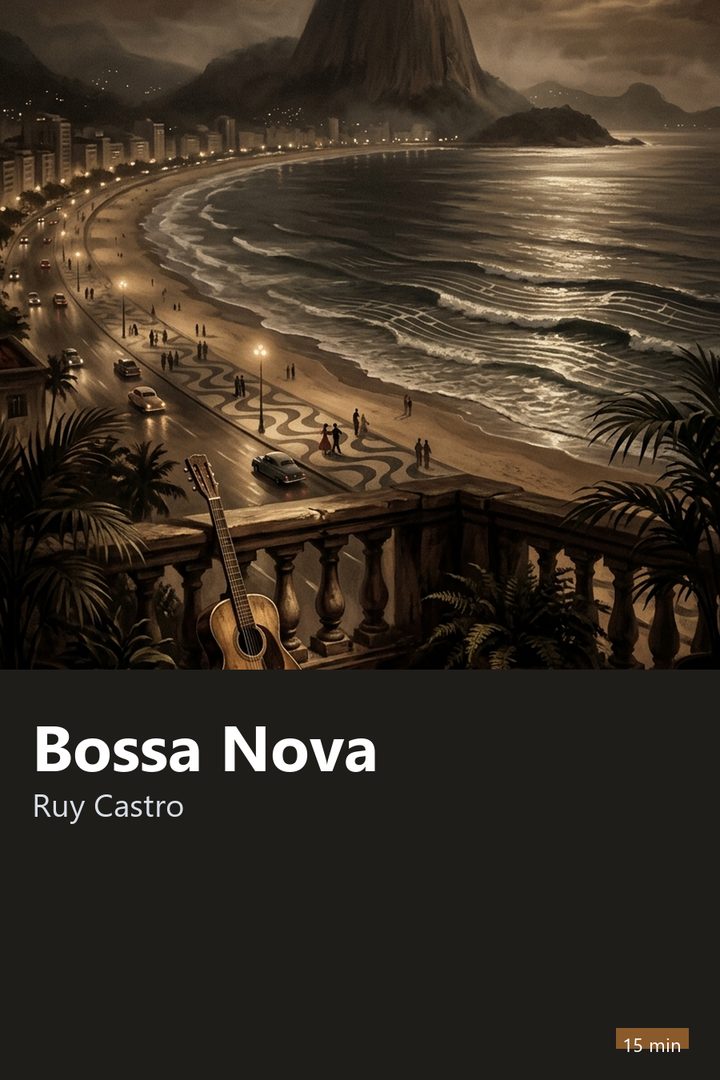
In Bossa Nova, Ruy Castro reconstructs the birth of the bossa nova movement by following people, settings, and encounters. The movement appears less as the sudden discovery of a lone genius and more as the outcome of a network. Singers, songwriters, instrumentalists, and friends all took part in a transformation that would reshape the image of Brazilian music.
The book blends investigative journalism with narrative drive. Conversations, parties, recording sessions, and falling-outs help show how seemingly small decisions took on historical importance. Its core material is the memory of the participants, cross-checked and organized by the author. Because of this, the backstage stories get just as much space as the songs that became famous.
To step into this story, picture a circle of friends getting together to play music after work. Someone introduces a different chord, another person tweaks a lyric, a third knows someone at a radio station. The difference is that, in the world Castro describes, this informal circulation ended up helping redefine popular music.