A Catastrophe Told by Those Left Behind
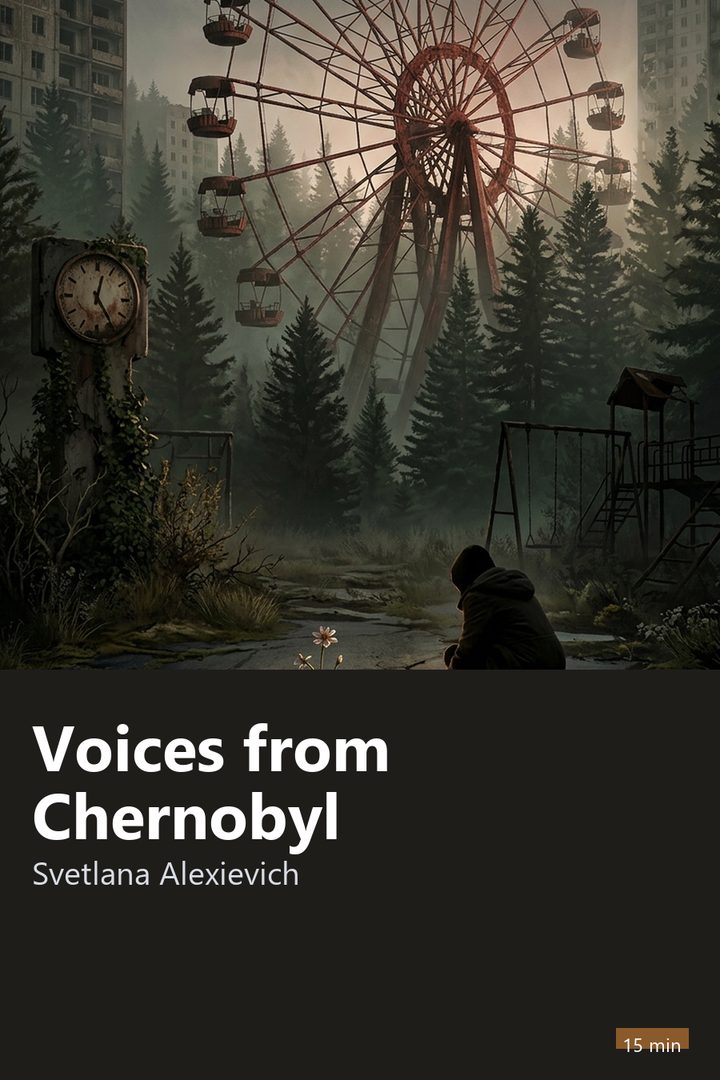
In Voices from Chernobyl, Svetlana Alexievich shifts the center of the story. Rather than focusing on explaining a reactor, she listens to people who had to keep living after the explosion. Widows, soldiers, scientists, residents, and children share experiences that disaster statistics cannot capture. The historical event emerges within ordinary life.
The author creates a polyphony, a composition of different, sometimes contradictory voices. One person's testimony does not settle the matter or cancel out the next account. Love, resentment, pride, fear, and longing coexist. This approach requires letting go of the expectation that a central authority will provide an orderly explanation that makes everything clear.
Her interest lies in how life changes when people face an experience without adequate points of reference. How do you talk about a house that is still standing but has become dangerous? How do you understand a war without a visible enemy? The book explores this gap between physical events and people's ability to give them shared meaning.