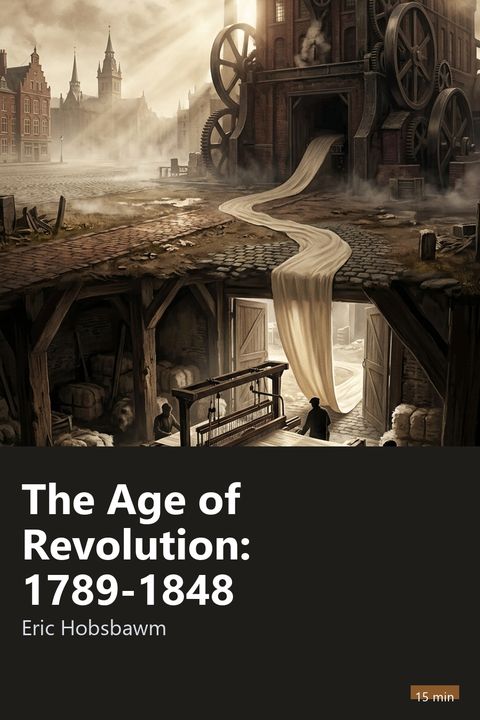
The World Before the Turning Point
Hobsbawm opens the book by showing what the world looked like around 1780: most people lived in the countryside, traveled slowly, and depended on the harvest. Large cities were rare, news took weeks to arrive, and those in charge were usually nobles, bishops, or landowners. It was a slow-moving, hierarchical world.
Even so, signs of change were already appearing. Trade with the colonies was growing, Enlightenment ideas circulated in coffeehouses and salons, and a class of merchants, lawyers, and manufacturers was making money and developing ambitions to rule as well. It was a powder keg waiting for a spark.
The book's question is simple and enormous: how did the world move from this almost medieval framework to a society of factories, newspapers, political parties, and national borders in just sixty years? The author's answer has a name: the dual revolution.