15 Minutes
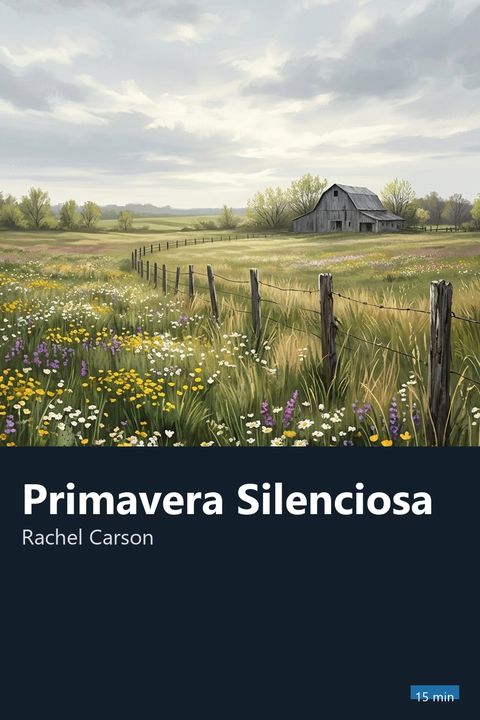
Cover of Silent Spring

Science · 15 min

Silent Spring

Rachel Carson · 1962

Who it's for

For anyone who has wondered what really comes along with the apples, tomatoes, or fish they bring home from the farmers market. Silent Spring is the book that made the world take a closer look at the poisons sprayed on farmland and in cities.

Read it in the app

⚡ Free to download • 🎁 One full book free every day

3 ideas to take with you

1

Treating soil as lifeless dirt means ignoring a living city of earthworms, fungi, and bacteria that supports the entire farm.

2

When the response to a scientific warning is to attack the person rather than the data, it is worth asking who felt threatened.

3

Understanding a farm's ecosystem before intervening usually delivers cheaper, longer-lasting pest control than all-out chemical warfare.

“
Poison amounting to a drop at the bottom of the food chain can become a high dose at the top, where no one expected it.
An idea from Silent Spring, in the words of 15 Minutes

Preview

Start reading now

The Fable of a Town Without Birds

The book opens with an imaginary scene pieced together from real events: a beautiful American town with green fields and streams full of fish, where spring suddenly arrives without birdsong. Chickens fall ill, bees disappear, apple blossoms go without pollination, and a snow-white layer covers the rooftops. The author makes it clear that no sorcerer did this: we did it ourselves.

Imagine a weekend place in the country where, one year, the morning silence becomes more unsettling than the rooster's crow. That is the picture. The chapter sounds an alarm without numbers, preparing you for what follows: an argument packed with data, laboratory findings, declining populations, and specific locations for every case.

Carson makes it clear that she is not writing against science. She is writing against its arrogant use, as though nature were a machine you could fix with a single wrench.


Chemicals Developed for War Reach the Farm

After World War II, the chemical industry had production capacity and many compounds tested on the battlefield. DDT, which had protected soldiers against lice and mosquitoes, became a consumer product. Carson shows how new substances, absent from nature and unfamiliar to organisms that might break them down, began to be sold in cans, in bags, and for application by crop-dusting planes.

The problem, she says, is scale and persistence. Plants have lived with attacks from naturally occurring caterpillars for millennia. A synthetic compound that remains for months or years in soil, water, and animal tissue is another story, because it builds up instead of disappearing.

The book reminds us that humans have always changed their environment, but never before had they released so many long-lasting compounds in so many places at once, in such a short time.

From Fields to Faucets: Water Carries Everything

Poison applied in a field does not stay there. Rain washes it away, rivers carry it, and groundwater reserves absorb it. Carson describes chemical residues appearing in streams, ponds, and wells, often far from any treated farm. Fish died by the thousands, and water that looked clean carried traces no naked eye could detect.

Think about what happens after heavy rain in farming country: the brown runoff flowing toward the creek carries soil, fertilizer, and whatever was sprayed the week before. The author follows that reasoning with a biologist's rigor, showing that water is the main transportation route for whatever we spread around.

The point is unsettling because the damage appears later and elsewhere. The person who applied the chemical is rarely the one drinking it, and the person drinking it rarely knows where it came from.

10 more sections and the quiz

Continue in the app

Read the whole summary, finish with the Silent Spring quiz and follow the guided Journeys. No ads in the app.

About Rachel Carson

Rachel Carson was an American marine biologist and writer, born in Pennsylvania in 1907. She worked for years at the U.S. Fish and Wildlife Service and became famous with The Sea Around Us, published in 1951. She published Silent Spring in 1962 and died of breast cancer two years later, in 1964.

Explore

Category:
Science