15 Minutes
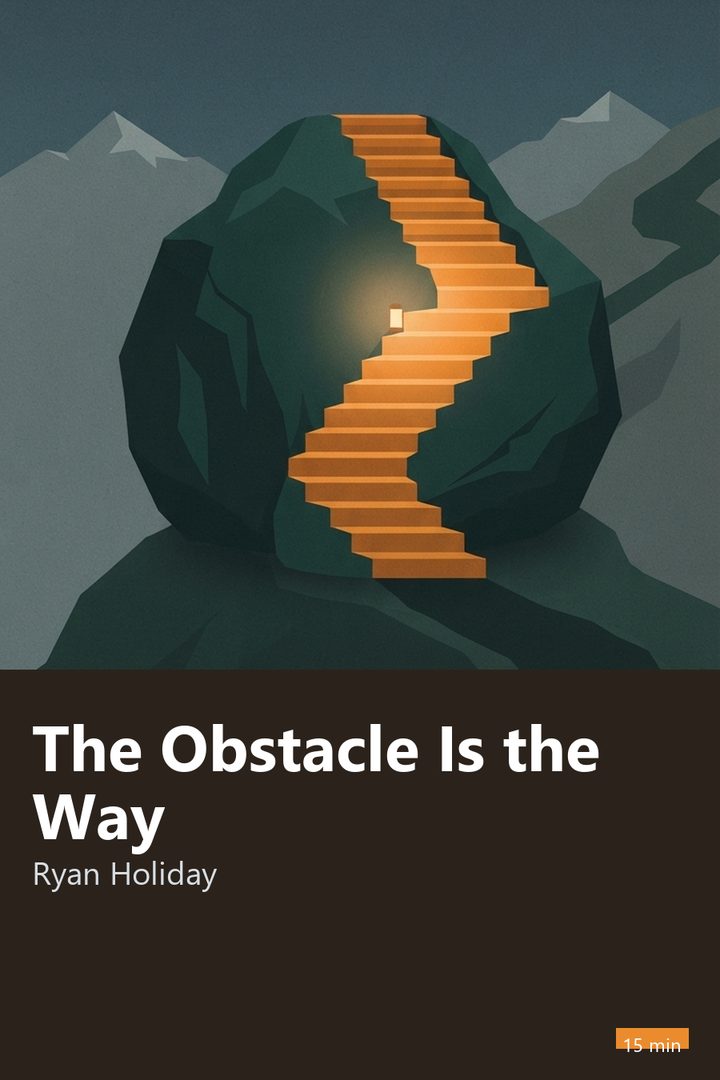
Cover of The Obstacle Is the Way

Philosophy · 15 min

The Obstacle Is the Way

Ryan Holiday · 2014

Who it's for

For you if you freeze up at every setback, from a difficult boss to an overdue bill, and wish you had more control over how you react when life throws a curveball in your path. A good starting point if you want to trade the automatic complaint for practical action, without promising that the problem will disappear.

Read it in the app

⚡ Free to download • 🎁 One full book free every day

🎧 Audio coming soon in the app

Narration for the English summaries is on its way. Meanwhile you can read the full summary in the app.

3 ideas to take with you

1

Swapping the question "why did this happen to me?" for "what do I do with this now?" is what separates the people who freeze from the people who keep moving.

2

Spending energy arguing with a fact that has already happened is the surest way to lose the strength you had left to fix what can still change.

3

A small obstacle handled well every day trains your mind for the big obstacle that is still on its way.

“
The problem didn't ask if you were ready, and yet it became your chance to show what you're made of.
An idea from The Obstacle Is the Way, in the words of 15 Minutes

Preview

Start reading now

The idea behind the title

The book's title comes from an ancient Stoic idea, attributed to the Roman emperor Marcus Aurelius: what gets in the way can become the way itself. This isn't the advice of some generic self-help character, it's a practical shift in perspective, tested by people who faced war, illness and public failure.

Ryan Holiday takes this two-thousand-year-old idea and organizes it into three parts that complete each other: first how you see the problem, then what you do with your hands, and finally what you accept you cannot change. The three go together, and none of them holds up without the others.

It's worth noting that the order matters too: people who try to act before getting their heads straight tend to spend their strength in the wrong direction, and people who only accept without ever acting become spectators of their own lives. The book insists that the three disciplines have to work together, in the right sequence.

Think of a flat tire on the way to work. The problem is the same for the person who freezes in anger and loses the whole morning and for the person who changes the tire, calls the boss to say they'll be late and carries on with the day. The obstacle didn't change, the response did.

The first choice is how you look at the problem

Before any action, there's an invisible choice: the way you interpret what happened. Losing your job can become "my life is over" or "I need to replan the month and look for another opening tomorrow morning." The fact is the same, the meaning you give it is your choice.

This isn't pretending everything is fine. It's separating the fact, "I lost my job," from the story your mind tells on top of the fact, "I'll never get another one, I'm finished." The story is what freezes you, not the fact.

A simple exercise: when a problem arrives, write on a single line what actually happened, with no adjectives. Then, on another line, write your first emotional reaction. Seeing the two side by side already helps your mind cool down before you act.

Over time, this exercise becomes an automatic habit, and you start to notice the difference between fact and interpretation almost instantly, without having to stop and write. It's a mental muscle that gets stronger with repetition, not a talent some people are born with and others aren't.

What's in your hands and what isn't

One division shows up throughout the whole book: there are things that depend only on you, your effort, your attitude, the next call you make, and things that don't, the traffic, the bank's decision, the client's mood. Spending energy fighting with the second list is the fastest way to get tired with nothing to show for it.

The rideshare driver who keeps cursing rush-hour traffic burns the same energy as the driver who puts on a podcast and accepts that this stretch is going to take a while. Neither one changes the traffic, but only one of them arrives less stressed.

It's worth making this list for real, on paper, the next time a big problem shows up: on one side what depends on me, on the other what doesn't. Your energy only pays off when it goes in the right column.

11 more sections and the quiz

Continue in the app

Read the whole summary, finish with the The Obstacle Is the Way quiz and follow the guided Journeys. No ads in the app.

About Ryan Holiday

Ryan Holiday is an American writer born in 1987, known for popularizing ancient Stoic ideas applied to practical life and business. Before writing, he worked as the director of marketing for the fashion brand American Apparel and was a research assistant to the author Robert Greene. The Obstacle Is the Way, published in 2014, became known for being read and recommended by coaches and athletes on American sports teams. Holiday also owns a physical bookstore, the Painted Porch, in Bastrop, Texas, and runs The Daily Stoic, a project with a daily newsletter and podcast about Stoicism.

Explore

Category:
Philosophy