15 Minutes
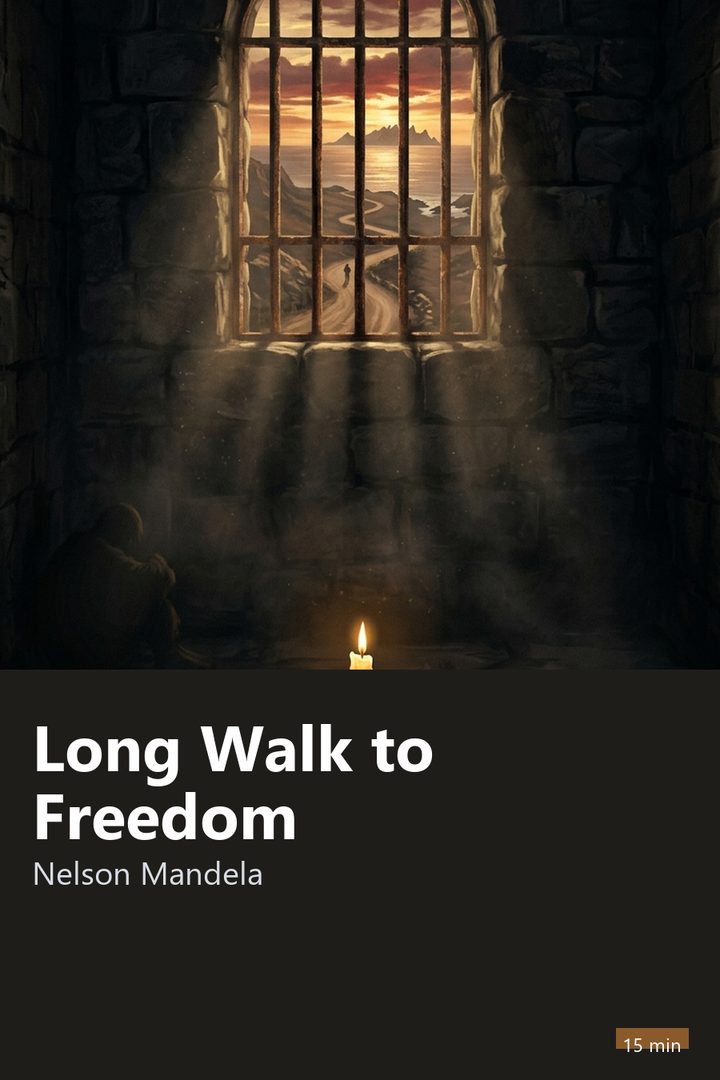
Cover of Long Walk to Freedom

Biographies and Memoirs · 20 min

Long Walk to Freedom

Nelson Mandela · 1994

Who it's for

For anyone who wants to learn about Mandela's life and understand how a collective struggle reaches into work, family, imprisonment, and negotiation. It also welcomes readers looking for a political biography without expecting quick solutions to complex problems.

Read it in the app

⚡ Free to download • 🎁 One full book free every day

🎧 Audio coming soon in the app

Narration for the English summaries is on its way. Meanwhile you can read the full summary in the app.

3 ideas to take with you

1

Listening can strengthen authority when it helps you understand disagreements before choosing a direction.

2

Even a just cause must face the costs its choices impose on the people closest to it.

3

Recording an experience helps challenge the meaning powerful institutions try to assign to the people who lived through it.

“
Inequality becomes more visible when we follow the path of someone trying to work, find housing, and get around.
An idea from Long Walk to Freedom, in the words of 15 Minutes

Preview

Start reading now

Before the Symbol, a Boy

Nelson Mandela begins his story far from palaces and mass demonstrations. Born in 1918 in Mvezo, he grows up mainly in Qunu, in a rural community connected to the Thembu people. Games, tending animals, and stories told by elders shape his earliest understanding of responsibility, belonging, and standing in the eyes of others.

His birth name is Rolihlahla. The name Nelson comes from his teacher, following a colonial school custom that replaced African names with English ones. This detail introduces a tension running through the autobiography: learning to use the tools of the dominant society without accepting that your own background is inferior or disposable.

Mandela does not describe childhood as conscious preparation for becoming a hero. He shows a boy learning codes of courage, respect, and masculinity, some of which he later questions. The strength of this opening lies in its reminder that political identities are built: no one is born knowing how to confront a state or represent millions of different people.
Learning to Listen Is Also Power

After his father's death, Mandela comes under the care of the regent Jongintaba at the residence in Mqhekezweni. The regency provides an education and exposure to community decision-making. At the meetings he observes, different men offer their opinions before the chief makes his final remarks, an experience that influences his understanding of leadership and listening.

This upbringing does not amount to an egalitarian democracy in the modern sense. Traditional hierarchies and exclusions must be acknowledged. Still, Mandela takes away a lesson: authority does not have to express itself through constant interruption. A leader can follow the conversation, notice disagreements, and seek a direction that participants can recognize as their own.

At school and later at Fort Hare, his world expands. A conflict over student representation interrupts his university education. Later, faced with marriages arranged by the regent, he and Justice flee to Johannesburg. The future leader also acts out of personal restlessness, a desire for independence, and fear.

The City Unravels Old Certainties

Johannesburg reveals an industrial society sustained by Black labor and organized to limit Black people's possibilities. Mandela faces financial hardship, precarious jobs, and dependence on acquaintances. The city is more than a backdrop: it shows how individual ambition and effort encounter barriers created by laws, customs, and the unequal distribution of opportunities.

Walter Sisulu becomes a decisive presence, connecting Mandela with people, work, and political activism. At a law firm, he works alongside colleagues from different backgrounds and begins reconsidering his own prejudices. Direct experience undermines simple explanations of who might be an ally or an adversary based solely on membership in a particular social group.

Later, Mandela and Oliver Tambo open a law firm serving many Black clients. Paperwork, evictions, and arrests make segregation visible in everyday life. For American readers, a point of connection is the bureaucracy that turns a problem involving work, housing, or transportation into a succession of closed doors.

11 more sections and the quiz

Continue in the app

Read the whole summary, finish with the Long Walk to Freedom quiz and follow the guided Journeys. No ads in the app.

About Nelson Mandela

Nelson Mandela was born in 1918 in Mvezo, South Africa, and died in 2013 in Johannesburg. A lawyer and leader of the African National Congress, he spent about 27 years in prison. He received the 1993 Nobel Peace Prize, shared with Frederik de Klerk. He was president of South Africa from 1994 to 1999, following the country's first national elections with universal adult suffrage.

Explore