15 Minutes
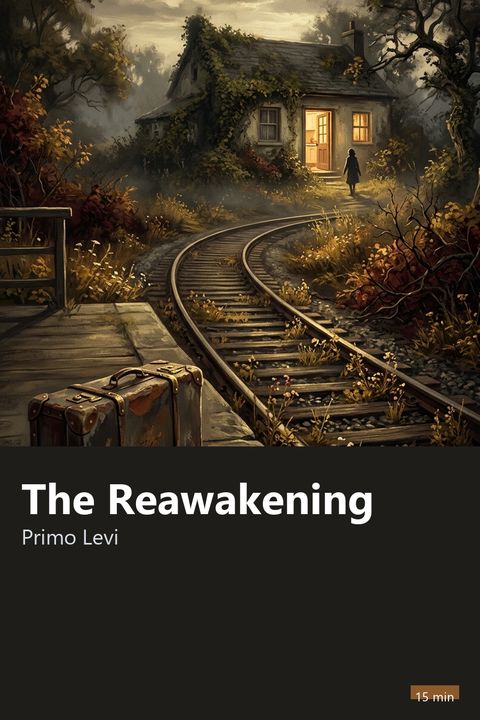
Cover of The Reawakening

Biographies and Memoirs · 15 min

The Reawakening

Primo Levi · 1963

Who it's for

For anyone who wants to read the continuation of Survival in Auschwitz and understand one Auschwitz survivor's long journey home. It's also for readers who enjoy travel narratives with humor and sensitivity, and who feel ready to engage with a difficult subject.

Read it in the app

⚡ Free to download • 🎁 One full book free every day

🎧 Listen to this summary in the app

Every summary has audio narration. Open the app to read it or listen to it.

3 ideas to take with you

1

Between war and peace lies an interval when freedom still has to be relearned, and that time deserves respect.

2

Levi's humor serves as a form of dignity, not as an escape from pain.

3

People who tell their stories and go unheard carry a second burden: having to remember alone.

“
Naming those who left no record is a way of keeping oblivion from finishing the work of the crime.
An idea from The Reawakening, in the words of 15 Minutes

Preview

Start reading now

A Book About What Comes After

The Reawakening tells the story of Primo Levi's journey home. He had been deported to Auschwitz in 1944 and described his time in the camp in his earlier book, Survival in Auschwitz. This second book, published in 1963, begins with liberation and ends with his arrival in Turin almost nine months later.

The idea of a truce carries an ironic meaning here. Between war and peace lay a strange interval without clear rules, when millions of people wandered across Europe without papers, money, or any real certainty about where to go. Levi calls this interval a truce: a pause, but not yet peace.

This summary tells the entire story, including the ending. It discusses a Holocaust survivor's memories and mentions deaths, including that of a child. Read with care, and take a break if you need one.
January 1945: The Camp Without Guards

The book opens with the final days of Auschwitz. The Germans flee the advancing Soviet army and abandon the sickest prisoners, including Levi, who was in the infirmary with an infectious disease. On January 27, the first Soviet soldiers appear on horseback and look at the survivors in a heavy silence.

Levi describes this moment without euphoria. It isn't a celebration but a void. People were weak and hungry, surrounded by corpses and bitter cold. Freedom arrives as a strange fact that doesn't yet feel like relief.

The author and a few companions care for the sick with whatever remains, gathering coal, food, and firewood to survive those first days. Their improvised solidarity will save many people, and the book begins by showing that survival depended on practical work.

Hurbinek, the Boy Without a Name

One of the most moving episodes concerns Hurbinek, a child of about three who couldn't walk or speak properly. Nobody knew his real name, and the adults called him Hurbinek because of the sounds he made. He kept trying to say a word that nobody could understand.

The survivors tried to help, talked to him, and gave him what little they had. The boy's insistence on being understood leaves a lasting mark on Levi. Hurbinek died a few days after liberation, never having known life outside the camp.

Levi's writing serves as a small memorial. Someone who left no record, no name, and no surviving family still existed. The page becomes a way to remember that every victim had a story the world barely got to know.

12 more sections and the quiz

Continue in the app

Read the whole summary, finish with the The Reawakening quiz and follow the guided Journeys. No ads in the app.

About Primo Levi

Primo Levi was born in Turin, Italy, in 1919 and trained as a chemist. He was deported to Auschwitz in 1944 and survived. He published Survival in Auschwitz in 1947 and The Reawakening in 1963. He died in Turin in 1987.

Explore