15 Minutes
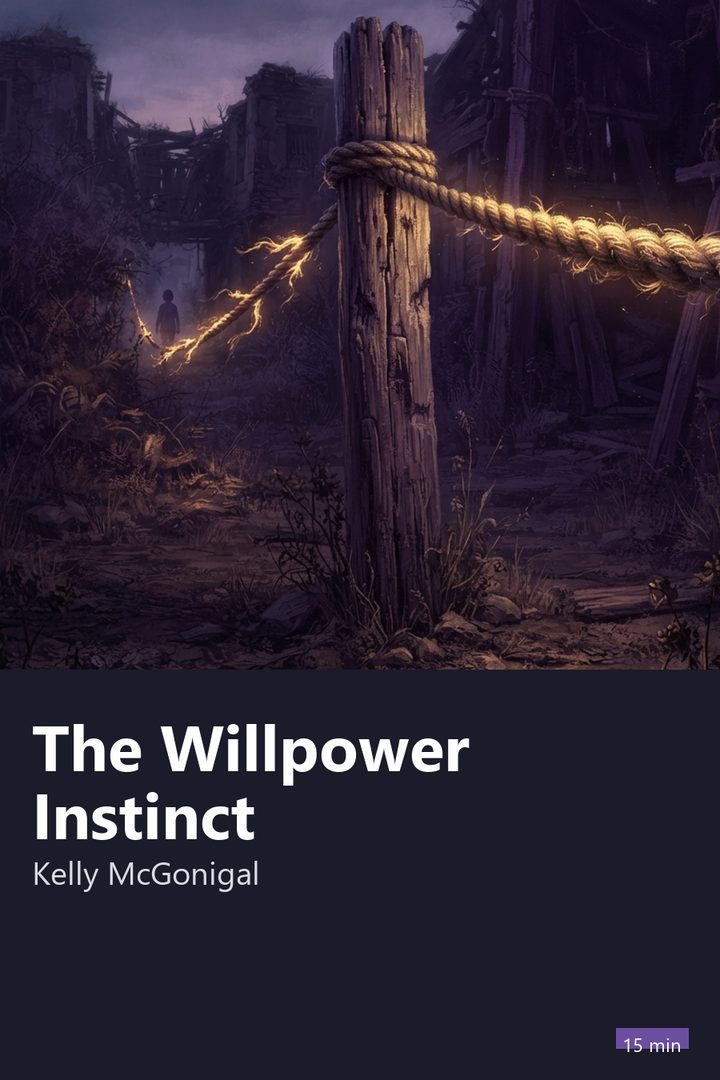
Cover of The Willpower Instinct

Habits and Discipline · 15 min

The Willpower Instinct

Kelly McGonigal · 2011

Who it's for

For anyone who has promised to change a habit over and over, broken the promise, and beaten themselves up for it. A summary to trade guilt for an understanding of how willpower actually works in the body.

Read it in the app

⚡ Free to download • 🎁 One full book free every day

🎧 Audio coming soon in the app

Narration for the English summaries is on its way. Meanwhile you can read the full summary in the app.

3 ideas to take with you

1

Willpower is not a gift you either have or don't: it's a capacity that rises and falls through the day, depending on sleep, stress, and even your breathing.

2

Feeling guilty after a slip rarely helps you start over; being harder on yourself usually paves the way to quitting for good.

3

The brain confuses wanting with liking: sometimes you chase something just because it promised pleasure, not because it will deliver.

“
A good deed sometimes becomes a license for a bad choice right afterward, and the book calls this moral licensing.
An idea from The Willpower Instinct, in the words of 15 Minutes

Preview

Start reading now

A Stanford course turned into a ten-week experiment

This summary covers The Willpower Instinct, by psychologist Kelly McGonigal. The book grew out of a continuing-education course she taught at Stanford, called The Science of Willpower. Instead of just listing research, each chapter of the course became a one-week practical challenge for students to test on their own routines, and that weekly challenge structure is what the book reproduces.

The central idea is simple to state and hard to apply: willpower is not a fixed virtue, like you either have it or you don't. It's a biological capacity that changes from hour to hour, that gets tired, that recovers with rest, and that reacts to triggers many people don't even notice they're pulling. Understanding those triggers is what separates people who just try to push harder from people who actually manage to change.
The three powers of willpower

McGonigal splits willpower into three powers that work together. "I will" is the energy to face a boring task, like getting up for the gym on a cold day. "I won't" is the brake that stops the wrong impulse, like not answering that message in the heat of anger. And "I want" is remembering, in the middle of temptation, the bigger goal you truly chose, like the health you want to have a few years from now.

These three powers live in the same region of the brain, the area behind the forehead called the prefrontal cortex. When that region is tired or distracted, any of the three can fail first, and that's where the classic "I'll deal with it later" shows up, whether it's about credit card debt or the cigarette you were supposed to quit last week.

The pause-and-plan instinct

The book describes a mechanism the author calls the pause-and-plan instinct. It's the opposite of the fight-or-flight instinct: instead of revving up the body to react fast, it slows the reaction down for a second so the brain has time to choose the right response, rather than the first one that comes to mind.

The biological clue McGonigal uses is heart rate variability, the changing distance between one heartbeat and the next. The greater that variation in a calm moment, the more self-control reserve a person tends to have available. It drops when you sleep badly, eat badly, or live under stress, and it rises with slower breathing, decent sleep, and regular physical activity.

13 more sections and the quiz

Continue in the app

Read the whole summary, finish with the The Willpower Instinct quiz and follow the guided Journeys. No ads in the app.

About Kelly McGonigal

Kelly McGonigal is a health psychologist who teaches and gives talks at Stanford University in the United States. This book grew out of a continuing-education course she created at Stanford called The Science of Willpower. Originally published in 2011, it was also released in the United States under the title Maximum Willpower. In Brazil it came out as Os Desafios à Força de Vontade, from Fontanar, an imprint of Companhia das Letras.

Explore

Part of the Journeys:
Habits That Stick