15 Minutes
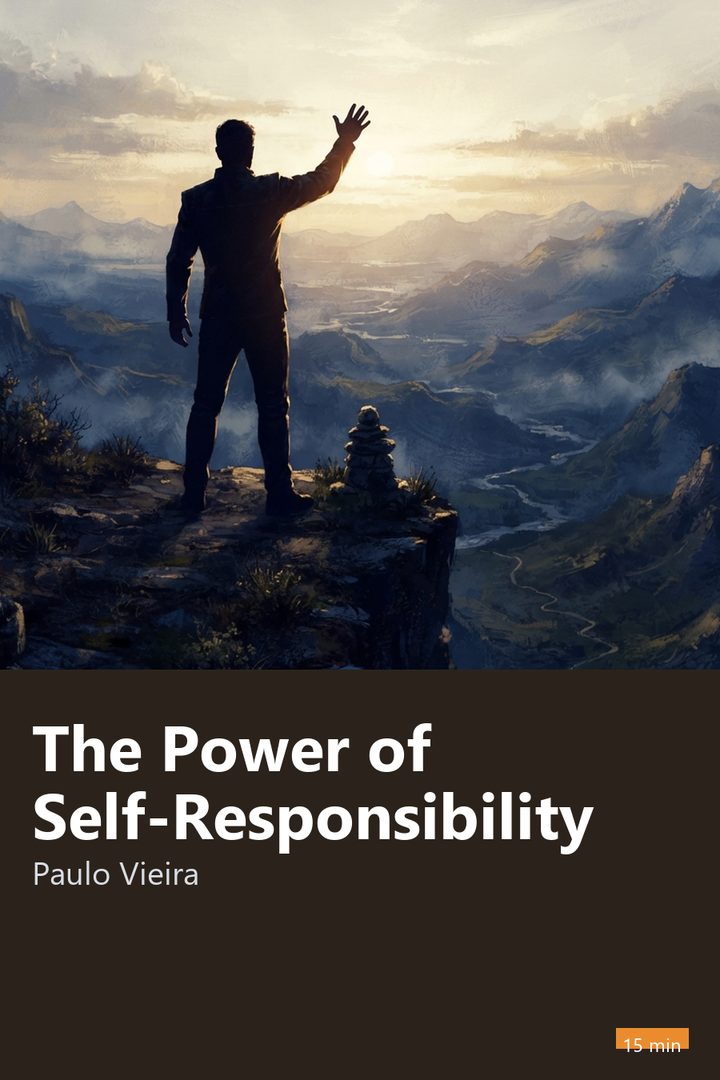
Cover of The Power of Self-Responsibility

Habits and Discipline · 14 min

The Power of Self-Responsibility

Paulo Vieira · 2017

Who it's for

Original title (Portuguese): O Poder da Autorresponsabilidade. For anyone who feels they spend their days complaining about the boss, the family, the government, and bad luck, and wants a practical way to trade complaining for action. It's also for people who lead a team and are tired of meetings that turn into a hunt for someone to blame.

Read it in the app

⚡ Free to download • 🎁 One full book free every day

🎧 Audio coming soon in the app

Narration for the English summaries is on its way. Meanwhile you can read the full summary in the app.

3 ideas to take with you

1

According to Paulo Vieira, the life you have today is largely the result of your choices, actions, and omissions.

2

According to the book, playing the victim brings comfort in the short term because it takes away your obligation to act.

3

Owning what depends on you doesn't mean carrying guilt for what others did to you.

“
A complaint that arrives with a proposal becomes the start of a conversation, not noise.
An idea from The Power of Self-Responsibility, in the words of 15 Minutes

Preview

Start reading now

A Simple, Uncomfortable Idea

The whole book revolves around one short idea: the life you have today is, in large part, the product of your choices, your actions, and also your omissions. It's not just what you did; it's also what you failed to do, to say, to try.

Paulo Vieira calls self-responsibility the decision to see yourself as the main person responsible for your own results. Not because the world is fair, but because it's the only part of the equation you can truly change. You can't change your boss, the traffic, or the economy; you change your response to them.

The idea is uncomfortable because it takes away the comfort of the excuse. If the problem is always someone else, I'm free from acting. If part of the problem is mine, I have work to do. That discomfort is exactly what the author wants to provoke.

The Hidden Comfort of Being a Victim

The book describes victimhood as a mental habit: faced with any bad result, the person quickly looks for someone responsible outside themselves. The salary doesn't go up because of the company, the marriage is going badly because of the partner, the diet fails because of the routine.

For Vieira, this habit is attractive because it pays an immediate reward. People who cast themselves as victims get attention, sympathy, and above all, an exemption from changing. It's like the coworker who shows up late every day and always has a new story about the bus: the excuse solves the embarrassment of the moment and leaves the problem untouched for the next day.

The cost shows up in the long run. Whoever outsources blame also outsources the power to change, and ends up depending on other people getting better for their own life to get better.

Protagonist or Audience in Your Own Life

The counterpoint to the victim, in the book, is the protagonist: someone who, facing the same problem, asks what is within their reach. They don't deny the difficulty or pretend everything is fine, but they refuse to sit still waiting for someone else to fix it for them.

This kind of leading role doesn't depend on special talent. It depends on a choice repeated many times a day, in small situations: a hard conversation, an overdue bill, criticism received at work. Each response reinforces one side or the other.

The author insists that this switch has to become practice, not just intention. That's why the book organizes the idea into short rules, easy to remember in a pinch, which he calls the laws of self-responsibility. There are six, and each one swaps an automatic reaction for a deliberate action.

11 more sections and the quiz

Continue in the app

Read the whole summary, finish with the The Power of Self-Responsibility quiz and follow the guided Journeys. No ads in the app.

About Paulo Vieira

Paulo Vieira is a Brazilian coach and author, founder of Febracis, a company that offers personal development training and coach certification. He created the method he calls Integral Systemic Coaching, the basis of the company's courses and immersions. Before this book, he published The Power of Action, which became a bestseller in his country, and later released other titles on prosperity and results, such as Fator de Enriquecimento.

Explore

Part of the Journeys:
Discipline in Practice