15 Minutes
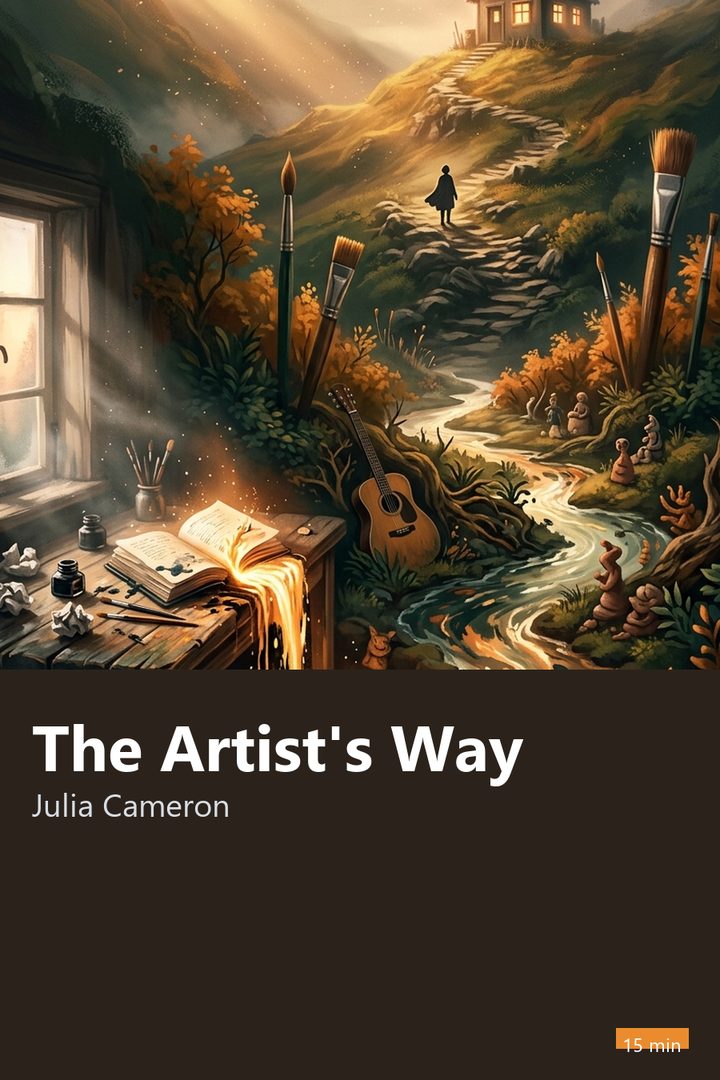
Cover of The Artist's Way

Personal Development · 18 min

The Artist's Way

Julia Cameron · 1992

Who it's for

For you if you have creative projects tucked away, freeze in front of a blank page, or feel that your routine has smothered your imagination. The Artist's Way offers a practical roadmap for reclaiming the courage to create without depending on anyone else's approval.

Read it in the app

⚡ Free to download • 🎁 One full book free every day

🎧 Audio coming soon in the app

Narration for the English summaries is on its way. Meanwhile you can read the full summary in the app.

3 ideas to take with you

1

Pouring raw thoughts onto paper every morning clears mental noise before outside demands take control of your day.

2

Setting aside regular time to feed your senses and imagination replenishes the raw material you need to create.

3

The discomfort you feel at someone else's success offers a revealing map of desires you haven't yet had the courage to acknowledge.

“
Demanding genius from the very first line is one of the most effective ways to kill an idea before it's born.
An idea from The Artist's Way, in the words of 15 Minutes

Preview

Start reading now

The myth of talent and reclaiming your ability to create

Many people grow up believing creativity is reserved for a chosen few geniuses. Anyone who can't draw well or play an instrument concludes they were born without that gift. Julia Cameron challenges this: creating is an ordinary human ability, stifled by routine, family expectations, and wounds accumulated in childhood.

Instead of treating inertia as laziness, the author proposes a clinical metaphor: the blocked person is wounded. A teacher told them their lines were crooked, or someone convinced them that art doesn't pay the bills. Getting unblocked is a patient rehabilitation process that helps you express yourself without fearing other people's scrutiny.

For someone clocking in at a store or putting in hours at an office, this block can feel indistinguishable from exhaustion. They spend hours on crowded public transit and conclude they have no talent for anything. Reclaiming that energy doesn't require quitting your job, but making room for curiosity to breathe.
Morning pages as a daily mental cleanup

The method's central tool is morning pages: writing three pages by hand every day as soon as you wake up. The basic instruction is to ignore style and coherence. Think of it as a drain for that first rush of mental noise, from the dishes in the sink to worries about your boss at work.

You shouldn't show these notebooks to anyone or reread them during the first few months. The point isn't to write literary pieces for social media, but to experience a quiet catharsis that drains emotional clutter. By transferring complaints and insecurities onto paper first thing, you clear the dust from your mind.

Writing by hand has a physiological rationale: pen on paper imposes a slower pace than typing on your phone. That slowness keeps anxiety from racing ahead of your feelings. Doing this cleanup before opening your messages protects your day from outside demands.

Quieting the Censor that sabotages your first steps

Almost everyone carries an inner critic that starts whispering the moment their hand touches the page. Cameron calls this voice the Censor: the saboteur who insists that your first sentence is ridiculous, your subject is boring, and failure is certain. It uses perfection to push you into giving up.

The way out isn't to wage war against these thoughts, but to ignore their commentary while your hands keep working. The Censor loves to pose as a sensible adviser protecting you from public embarrassment. Deep down, though, it acts as a paralyzing force that forbids any experimentation without a guaranteed outcome.

One practical tip is to give this inquisitor a funny nickname and offer an ironic thank-you before leaving it to talk to itself. When we accept that every beginning is imperfect, the Censor loses authority. Creating requires suspending judgment while an idea is taking shape and saving editing for a later stage.

11 more sections and the quiz

Continue in the app

Read the whole summary, finish with the The Artist's Way quiz and follow the guided Journeys. No ads in the app.

About Julia Cameron

Julia Cameron is an American writer, playwright, poet, and screenwriter born in 1948. She worked as a journalist for influential publications such as The Washington Post and Rolling Stone, as well as writing scripts for film and television productions in Hollywood. In 1992, she published The Artist's Way, drawing on the hands-on workshops she developed to help creative people overcome their blocks to self-expression. The book became a global publishing phenomenon, translated into dozens of languages.

Explore

Part of the Journeys:
Creativity Without Blocks