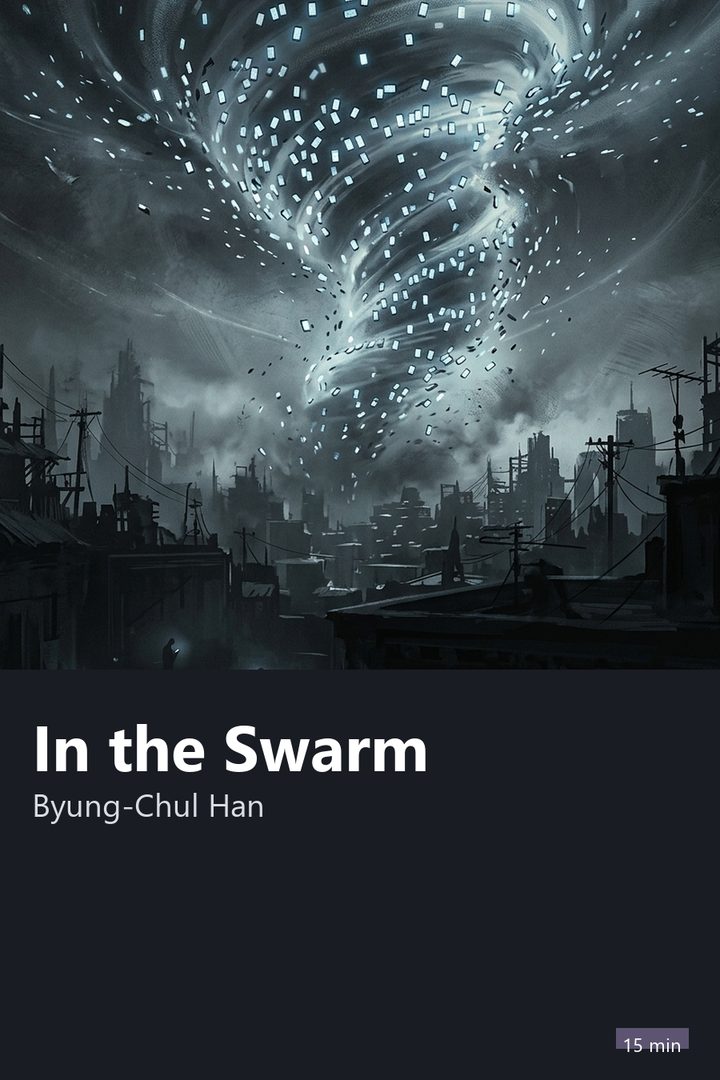
The Illusion of a Crowd When We Are Alone
Anyone who opens their apps first thing in the morning gets the distinct impression of witnessing a massive popular uprising. Thousands of heated comments pile up beneath controversial posts, and it seems as though the entire country has finally come together to take action. Yet when you look at passengers on a train or people waiting in line at a bakery, you see individuals hunched over separate screens, deeply isolated in their own glowing cocoons.
In the last century, popular movements gathered physically in public squares and outside factory gates, sharing a tangible space, a unified voice, and a sense of common destiny. In the connected world, what emerges is not a cohesive crowd but a digital swarm made up of solitary individuals who buzz at the same frequency for a few moments, then scatter without forming real bonds of solidarity.
Each participant in the debate acts like a self-contained monad, seeking quick validation and unloading passing frustrations in short messages. This collection of people lacks the ability to develop lasting collective projects. The swarm has none of the cohesion of an organized political body, serving more to spread noisy reactions than to transform the concrete reality beyond the screen.