Who decided what deserves to be called good?
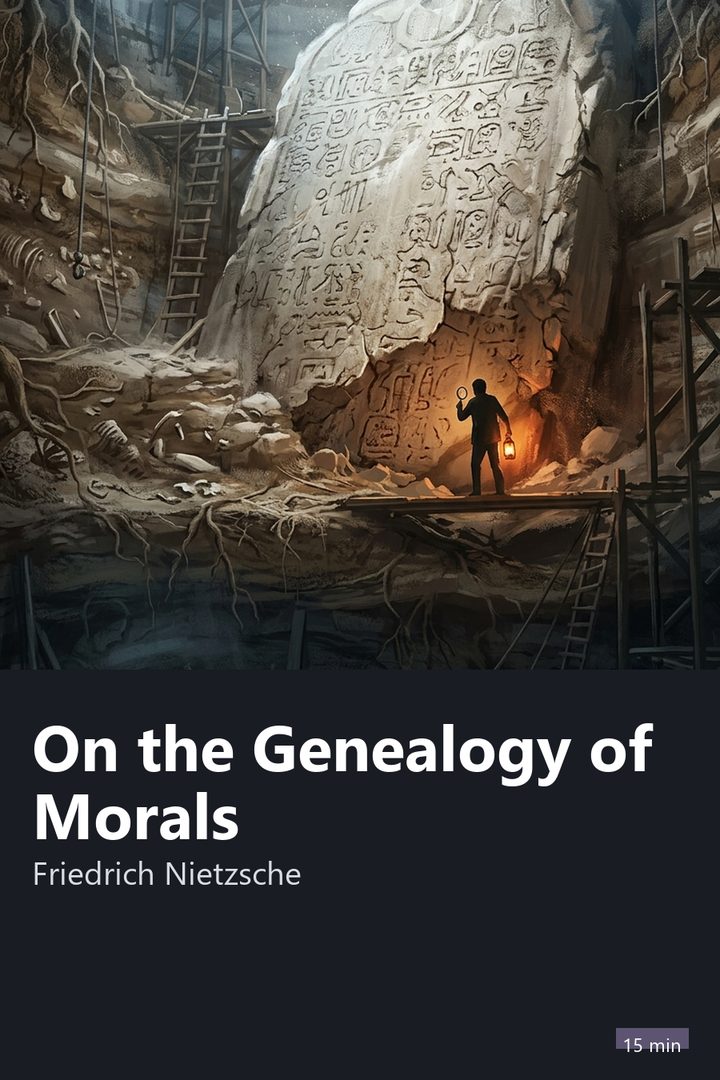
Published in 1887, the book brings together three essays that investigate how moral values were formed. Nietzsche does not start by asking which rules we should obey. His question comes earlier: who created these rules, under what circumstances, and with what interests? A genealogy traces the disputes, transformations, and interpretations hidden behind values that seem completely natural.
The target is not just one religion or a list of customs. It is the confidence that calling something good automatically proves its value for life. A respected behavior may foster human growth, but it can also express fear, revenge, or the need to control people and their desires.
Think of a family where disagreeing with elders is labeled ingratitude. An inquiry does not need to conclude that respect is useless. Instead, it asks when respect turned into mandatory silence and who benefits from that shift. Nietzsche proposes this shift in perspective, even though his own answers also need to face critical examination.