A book written in the middle of chaos
Leviathan came out in 1651, when England was emerging from a civil war that killed thousands, toppled the monarchy, and sent King Charles I to the scaffold. Thomas Hobbes wrote the book partly in exile in France, carrying the fear of someone who had watched his country tear itself apart because nobody knew whom to obey anymore. If you have ever seen a neighborhood where the police vanished and rival groups started ruling their own blocks, you have a small taste of what the author had in mind.
The question driving the book is simple and uncomfortable: why should people obey anyone? Hobbes does not answer with tradition, divine will, or the prestige of a king. He tries to start from scratch, looking at human beings as they actually are, and from there build a justification for state power. That is why the book is considered one of the founding texts of modern political philosophy.
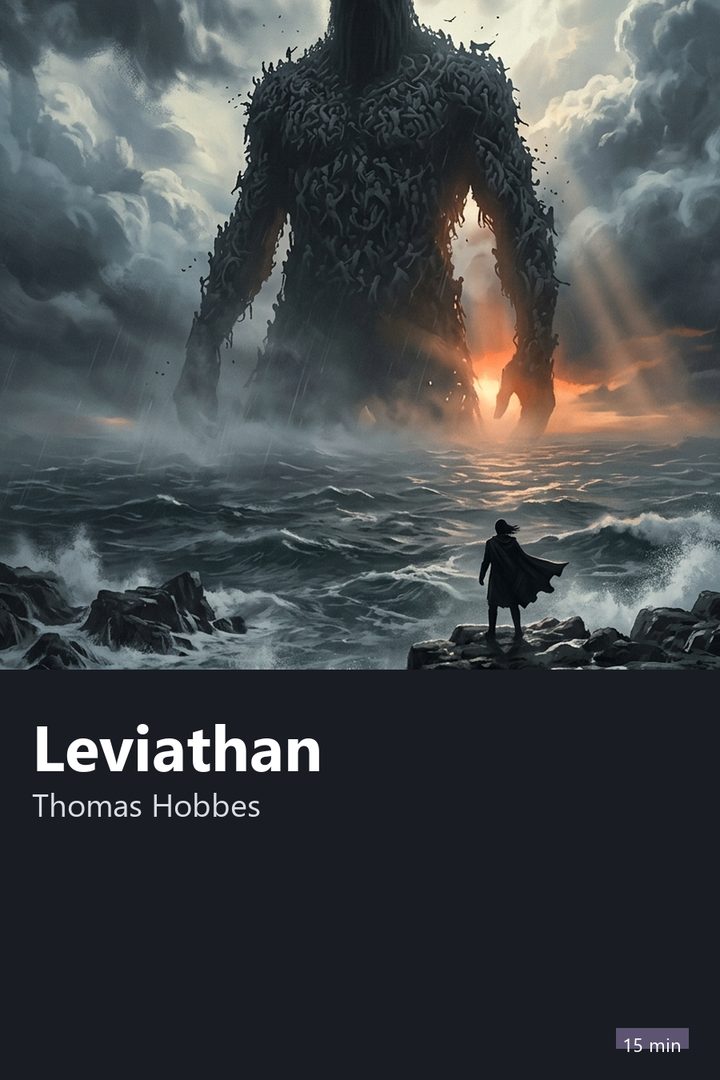
The title comes from a biblical monster, the Leviathan, used as an image of a state so strong that no one can challenge it. The cover of the first edition shows a crowned giant whose body is made up of hundreds of tiny people. The visual message sums up the thesis right away: the power of the sovereign is made from the sum of citizens who joined together so they would not destroy one another.