15 Minutes
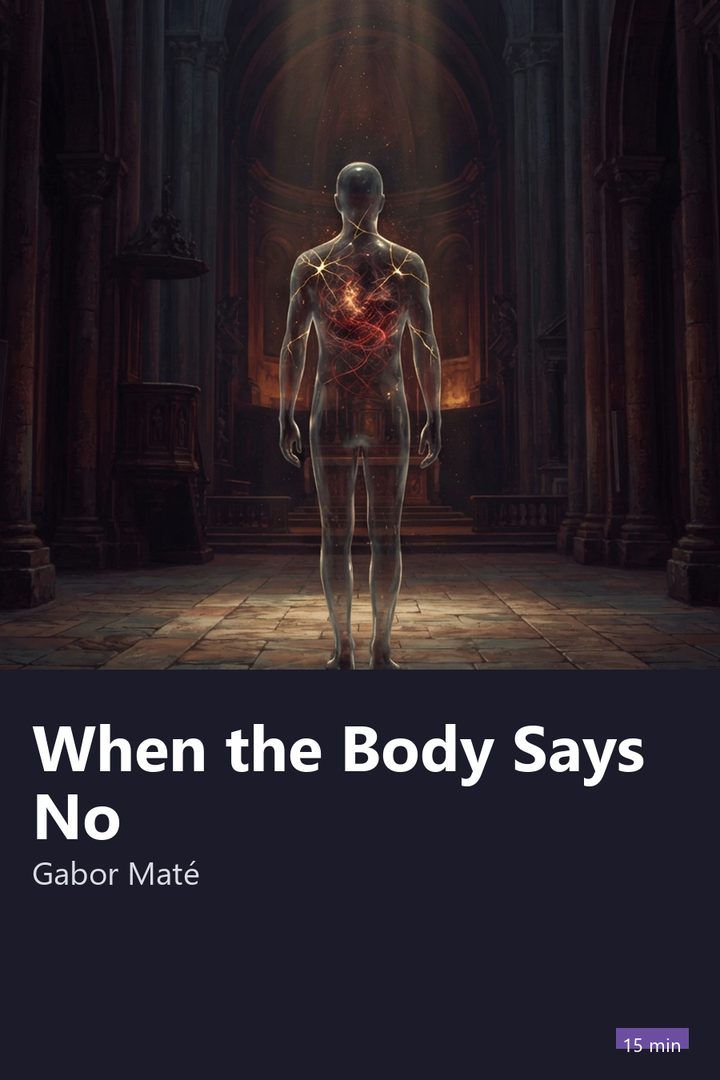
Cover of When the Body Says No

Mental Health · 13 min

When the Body Says No

Gabor Maté · 2003

Who it's for

For you who live in taking-care-of-everyone mode, have trouble saying no, and have been noticing signals in your body, like pain, exhaustion, or tension. It is also for anyone who wants to reflect on stress and health, without swapping a doctor for a book.

Read it in the app

⚡ Free to download • 🎁 One full book free every day

🎧 Audio coming soon in the app

Narration for the English summaries is on its way. Meanwhile you can read the full summary in the app.

3 ideas to take with you

1

For the author, kindness that becomes a shield against conflict comes at the price of ignoring your own needs.

2

The scientific consensus is that prolonged stress harms the body, while a direct link to specific diseases remains under debate.

3

Expressing anger works better as awareness and assertive action than as repeated aggressive venting.

“
Having autonomy does not mean going against your doctor, it means taking part in decisions about your own body and treatment.
An idea from When the Body Says No, in the words of 15 Minutes

Preview

Start reading now

The body and the mind do not live in separate houses

Dr. Gabor Maté spent decades treating people and noticed a pattern that traditional medical training does not teach you to see: many patients with serious or chronic illnesses had histories of prolonged emotional stress and of the habit of putting others first. Out of this observation came this book, which proposes looking at health without separating the body from emotional life.

The thesis is that repressed emotions and chronic stress can contribute to illness. The title itself sums up the idea: when a person cannot say no, the body ends up saying it for them, in the form of symptoms, pain, and disease. It is a powerful image, one that has impressed millions of readers.

A heads-up right away: the book mixes widely accepted scientific facts with the author's own hypotheses. That stress and emotions influence the body, almost nobody disputes. That they cause specific diseases, such as cancer or sclerosis, is another conversation, a far more uncertain one. We will separate one from the other throughout this summary.

What science already accepts about stress and the body

There is solid consensus on a few points. In threatening situations, the body releases hormones such as cortisol and adrenaline, which speed up the heart, raise blood pressure, and put the body on alert. This is useful for a few minutes, but harmful when it lasts months or years.

Prolonged stress is associated with sleep problems, high blood pressure, heart disease, anxiety, and depression, and it can worsen inflammatory conditions, including autoimmune diseases, in which the body's defenses attack healthy tissue. A research field called psychoneuroimmunology studies how the nervous system, hormones, and the body's defenses talk to one another.

Think of a worker facing a double shift, an aggressive boss, and debt. After months of this, it is common for headaches, gastritis, or repeated infections to appear. The book starts from this foundation and goes further, and it is in that leap that the debatable part lives.

Repression: the nice person nobody sees suffering

Maté observes that many of his patients had one trait in common: they were generous, helpful people who swallowed their anger and avoided being a bother. He connects this to what he calls emotional repression, the habit of not noticing or not expressing what one feels.

The point is not that being kind is a problem. It is that, for some people, kindness has become a shield against conflict, and the price is disconnection from their own needs. A person may insist they are fine while the body shows signs of tension, like a clenched jaw, light sleep, and stiff shoulders at the end of the day.

In everyday American life, this is the woman who cares for her husband, her children, her aging parents, and still her job, and who never complains. Or the man who learned that crying is weakness and who turns his anger into a knotted stomach. The book invites you to ask how much of that silence is choice and how much is habit.

10 more sections and the quiz

Continue in the app

Read the whole summary, finish with the When the Body Says No quiz and follow the guided Journeys. No ads in the app.

About Gabor Maté

Gabor Maté is a Canadian physician, born in Budapest, Hungary, in 1944, and based in Canada since 1956. He worked as a family doctor, in palliative care, and with people struggling with drug addiction in Vancouver. He has written books about stress, trauma, and addiction, and frequently gives talks on the emotional roots of suffering.

Explore

Category:
Mental Health
Part of the Journeys:
Take Care of Your Mind