15 Minutes
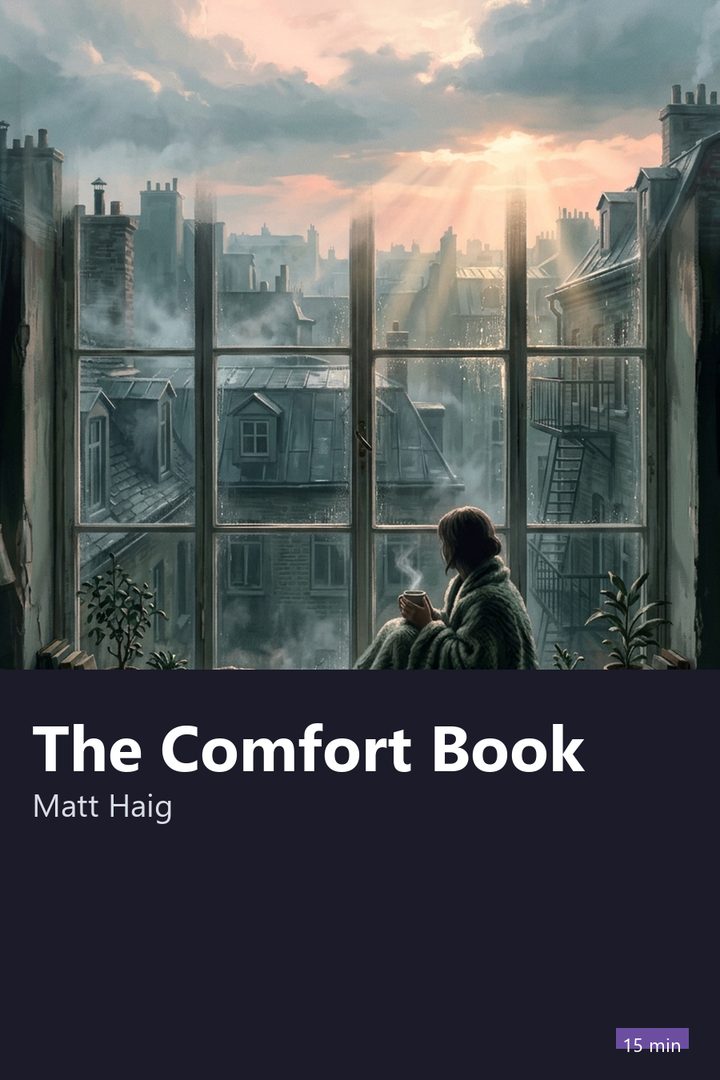
Cover of The Comfort Book

Mental Health · 14 min

The Comfort Book

Matt Haig · 2021

Who it's for

For you if you're going through a rough patch, feeling mentally drained, and need support in small doses, without lengthy explanations. It's also for anyone who enjoys reading short pieces on the bus or before bed.

Read it in the app

⚡ Free to download • 🎁 One full book free every day

🎧 Audio coming soon in the app

Narration for the English summaries is on its way. Meanwhile you can read the full summary in the app.

3 ideas to take with you

1

A rough patch feels permanent because a distressed mind projects today onto the entire future, but time often changes your inner weather.

2

Small pleasures, like hot coffee or a long shower, do more to get you through the day than waiting for a major turning point.

3

Speaking to yourself in the same tone you'd use with a dear friend changes your inner conversation and makes it easier to try again.

“
Having a bad thought is just a false alarm from your mind, not a verdict on who you are.
An idea from The Comfort Book, in the words of 15 Minutes

Preview

Start reading now

A Book You Can Open to Any Page

The Comfort Book wasn't meant to be read straight through in a hurry. Matt Haig put it together as a collection of fragments: short lists, brief reflections, reminders, and little stories you can fit into a bus ride or a wait in line at the bank. It's almost like a notebook the author wrote for himself on difficult days.

The idea is to open it wherever you land and find something small that helps in that moment. That changes what you expect from reading: there's no need to finish a chapter, memorize a concept, or complete an exercise. Just spend a minute with a sentence that rings true and get on with your day.

This format has a practical advantage when you're worn out. When your mind feels heavy, a long text becomes one more demand on your list. A short piece you can read in thirty seconds is a gentle invitation, not another obligation you'll leave unfinished.


Written by Someone Who's Been There

Haig is known for speaking openly about depression and anxiety. In Reasons to Stay Alive, he described how close he came to giving up on life in his twenties. The Comfort Book came later, with a different tone: less an account of crisis, more a toolbox from someone who's learned to get through bad days.

That background gives his writing weight. This isn't advice from someone who's never felt the ground fall away beneath them, but from someone who's tested what helps and what only irritates. That's why the book avoids big promises and favors small comforts, like someone offering a blanket rather than a life plan.

It's worth noting that comfort here doesn't mean pretending everything is fine. It means acknowledging that things are hard and still finding a small source of support: a light, a memory, a person, an idea that keeps you going for a few more hours.

Everything Changes, Including What Hurts Right Now

One idea the book returns to often is impermanence. What you're feeling now seems permanent, but experience tells a different story: rough patches end, seasons turn, and the person you were five years ago has already faced things that once seemed impossible to face.

When you're at rock bottom, being told that everything passes can sound empty. The book tries to give that idea substance by reminding you that a distressed mind works like a magnifying glass: it projects today onto the entire future and forgets that your inner weather has its own patterns, with rain and clear skies.

In practice, this is an invitation to wait without demanding happiness from yourself. You don't have to feel good today; you just don't have to conclude that you'll feel bad forever. Between those two things lies a little breathing room, and that's usually where hope finds a place.

11 more sections and the quiz

Continue in the app

Read the whole summary, finish with the The Comfort Book quiz and follow the guided Journeys. No ads in the app.

About Matt Haig

Matt Haig is an English writer born in Sheffield in 1975. He became known for speaking openly about his own depression and anxiety, the subject of Reasons to Stay Alive, published in 2015. He writes novels, children's books, and nonfiction, and published The Midnight Library in 2020. His books have been translated into dozens of languages.

Explore

Category:
Mental Health