Two games hidden inside the same board
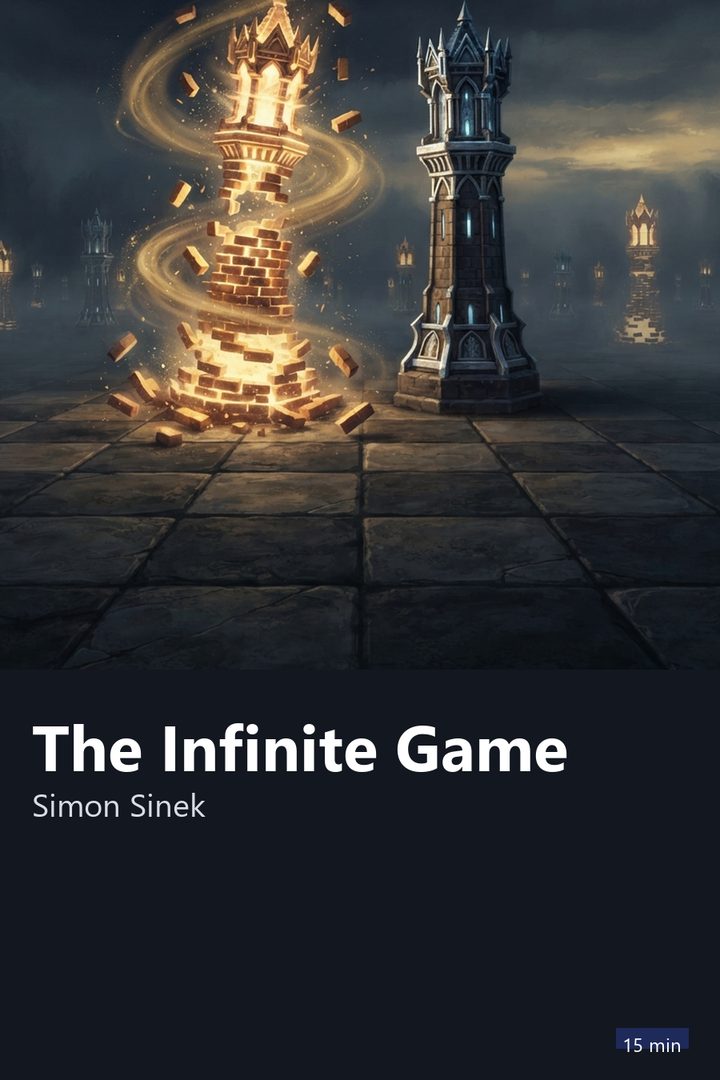
There are two kinds of games. In a finite game, the players are known, the rules are fixed, and everyone agrees on when it ends: a soccer championship, an election. In an infinite game, the players change over time, the rules can be rewritten along the way, and there is no finish line, only the desire to keep playing in the next round. This distinction didn't start with Sinek: he credits the idea to the philosopher James Carse, author of the 1986 book Finite and Infinite Games.
The problem, according to the author, is that we spend our whole lives learning to play finite games, with exams and podiums, and then we step into games with no end at all, like a career or the health of a company, and keep trying to "win" them the same way. A company has no finish line: it goes under, merges, or keeps on existing.
The book calls someone a finite player when they enter an infinite game trying to win, and an infinite player when they enter to keep playing as long as possible. The central idea is to swap the question "how do I win this right now" for the question "what do I need to do to still be in this game ten years from now."