15 Minutes
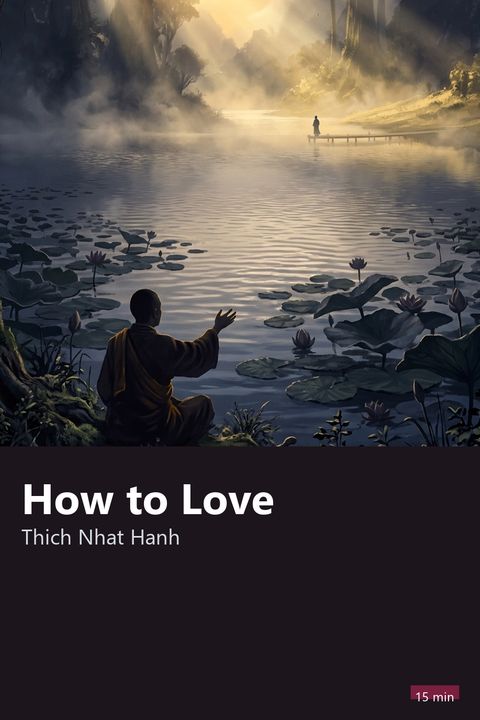
Cover of How to Love

Spirituality · 15 min

How to Love

Thich Nhat Hanh · 2014

Who it's for

For anyone who wants to nurture relationships with greater attention, listening, and compassion, starting with themselves, without needing to be Buddhist.

Read it in the app

⚡ Free to download • 🎁 One full book free every day

🎧 Listen to this summary in the app

Every summary has audio narration. Open the app to read it or listen to it.

3 ideas to take with you

1

For Thich Nhat Hanh, understanding another person's suffering and loving them are almost the same thing, because love grows as we come to see the story of the person beside us.

2

According to the book, true love combines kindness, compassion, joy, and freedom. When one of these four qualities is missing, love can turn into control, indifference, or obligation.

3

The peace treaty approach means waiting for your anger to settle before talking things through, so you don't unload your hurt in the heat of the moment.

“
Your undivided attention, without a phone, is a gift money can't buy and almost anyone can give.
An idea from How to Love, in the words of 15 Minutes

Preview

Start reading now

You Can Learn to Love

How to Love, by Thich Nhat Hanh, starts with an idea that sounds simple but challenges conventional wisdom: love isn't just a feeling that happens to you. It's a practice you learn. Just as you learn to cook or play an instrument, the Vietnamese monk says you can learn to care for someone through presence, understanding, and concrete actions.

This short book brings together teachings rooted in the Zen Buddhist tradition, using everyday language and few quotations. Each chapter serves as a practical reminder for anyone in a romantic relationship, a friendship, or a family. You don't have to be Buddhist or believe in anything in particular.

The underlying promise is that true love brings joy and relief, not anxiety. For the author, when love turns into jealousy, possessiveness, or demands, something has been forgotten. The way back involves three things: attention, understanding, and care.
Start with Yourself

One starting point may surprise you: you can't love someone well if you don't know how to care for yourself. The author insists that you need to learn to feel at peace in your own company, welcome your feelings, and care for your body and mind. When you're at war with yourself, you tend to bring that war into your relationships.

This isn't selfishness. Taking care of yourself is a way of preparing the ground. Someone who feels empty and exhausted has little to offer, while someone who nurtures themselves can be present and generous without burning out.

The suggested practices are simple: breathe mindfully, walk without rushing, and acknowledge difficult emotions instead of running from them. In a country of long workdays and crowded commutes, this can sound like a luxury. Still, the book shows that five minutes of mindful breathing can change how you feel when you get home.

Presence: The Most Valuable Gift

For the author, the greatest gift you can give someone is your presence. That means truly being with them, without a phone in your hand, your mind on work, or your thoughts on what to say next. When someone feels that you're fully there, something inside them relaxes.

He makes an interesting observation: many people say they love someone but spend their lives distracted. Someone who truly loves notices when the other person is sad, tired, or happy. Attention is the most concrete expression of love, and it takes practice.

Think of a Sunday lunch where everyone is on their own device. They're physically at the same table but absent from one another. Looking up again, asking questions, and listening, even for just a few minutes, are the kinds of gestures this book values.

11 more sections and the quiz

Continue in the app

Read the whole summary, finish with the How to Love quiz and follow the guided Journeys. No ads in the app.

About Thich Nhat Hanh

Thich Nhat Hanh was born in 1926 in Hue, Vietnam, and was a Zen Buddhist monk, poet, and peace activist. He spent decades in exile, founded the Plum Village community in France, and was nominated for the Nobel Peace Prize by Martin Luther King Jr. He wrote dozens of books, including The Miracle of Mindfulness. He died in Vietnam in 2022.

Explore

Category:
Spirituality