15 Minutes
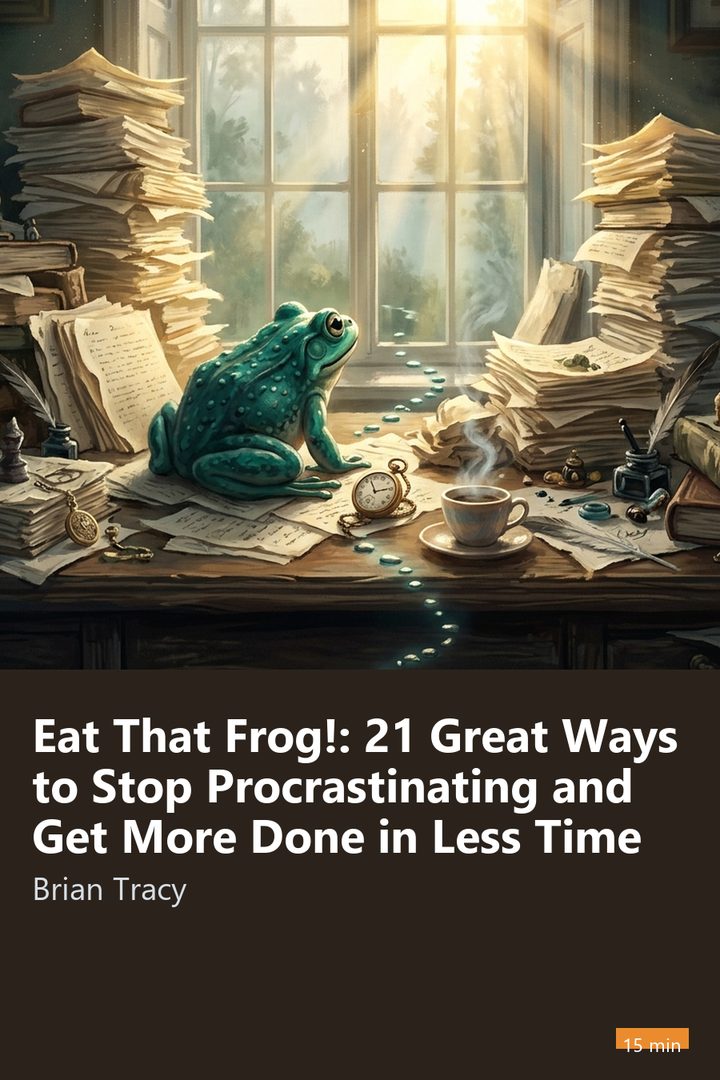
Cover of Eat That Frog!: 21 Great Ways to Stop Procrastinating and Get More Done in Less Time

Productivity and Focus · 17 min

Eat That Frog!: 21 Great Ways to Stop Procrastinating and Get More Done in Less Time

Brian Tracy · 2001

Who it's for

For anyone who keeps putting off tough tasks and reaches the end of the workday with the frustrating feeling of having run around all day without getting anywhere. It is a straightforward guide for salaried professionals and freelancers who need to regain their focus and learn how to prioritize what truly delivers results.

Read it in the app

⚡ Free to download • 🎁 One full book free every day

🎧 Audio coming soon in the app

Narration for the English summaries is on its way. Meanwhile you can read the full summary in the app.

3 ideas to take with you

1

Checking off a dozen minor tasks brings a false sense of relief that only delays the reckoning with that decisive obligation you avoided facing.

2

A project that intimidates you with its complexity loses its power to paralyze when you slice it into pieces small enough to be finished in ten minutes.

3

Consciously choosing which irrelevant demands to set aside is the decision that opens up space to dedicate yourself to what truly transforms your routine.

“
Putting goals on paper turns the despair of a disorganized mind into clear instructions for the next action.
An idea from Eat That Frog!: 21 Great Ways to Stop Procrastinating and Get More Done in Less Time, in the words of 15 Minutes

Preview

Start reading now

The morning frog and the illusion of getting everything done

The central image of the book comes from a metaphor attributed to Mark Twain: if you have to eat a live frog, the best thing to do is get it over with first thing in the morning. If there are two frogs on the table, the rule says to swallow the bigger one first. At work, the frog represents that vital, heavy, challenging task you prefer to put off while keeping yourself busy with easy distractions, tidying up your desk, or making small talk in the hallway.

Many professionals start the day knocking out small errands to build momentum, but this habit burns up their best morning energy and pushes the main obligation to the end of the workday. In practice, that choice consumes your sharpest mental stamina and leaves the decisive commitment for the moment when your mind is already saturated with fatigue. Staying in that false comfort zone brings no consistent progress and only feeds the guilt over late delivery on the projects that truly matter.

The starting point of the method is accepting that nobody has time to do everything other people ask for throughout the week. Real productivity consists of choosing the right frog and leaving secondary tasks aside. Overcoming procrastination requires recognizing the limits of your hours and focusing firmly on what truly moves your professional and personal life forward.

Radical clarity and the discipline of thinking on paper

Hesitation in the face of work rarely comes from physical laziness: it almost always arises from a lack of clarity about the next step. When a goal is vague or generic, the human brain perceives a threat and seeks immediate refuge in social media, quick messages, and routine chores that require no deep thinking.

To break through this block, Tracy proposes the discipline of always thinking on paper. Anyone who tries to manage commitments purely from memory overloads their attention and loses track of priorities. Writing down goals, detailing logical steps and strict deadlines, takes the weight off the mind and turns abstract intentions into concrete instructions for daily action in the workplace.

Every minute spent planning on paper saves up to ten minutes in executing the tasks. Sitting down before you start and mapping out the expected result banishes indecision and ensures that mental energy is channeled straight toward the goal, without wavering when the time to act arrives.

The four-list system and closing out the day before

The book organizes a productive routine into four practical levels of control: a master list, a monthly list, a weekly list, and a daily list. The master list captures every project, pending item, or future idea that crosses your mind, emptying your head of the stressful obligation of remembering everything on your own without external support.

From that broad foundation, you pull the priorities for the month and the commitments for the coming week. The decisive element of the whole system, however, is the daily list, which should be put together and finalized the afternoon before, prior to shutting down your computer or heading home from work. This habit keeps the start of the next workday from being hijacked by improvisation.

Planning your routine the day before wraps up the workday and lets your subconscious process solutions during a night's rest. The next morning, you wake up knowing esattamente where to begin, without wasting focus on the morning barrage of urgencies and piled-up messages.

11 more sections and the quiz

Continue in the app

Read the whole summary, finish with the Eat That Frog!: 21 Great Ways to Stop Procrastinating and Get More Done in Less Time quiz and follow the guided Journeys. No ads in the app.

About Brian Tracy

Brian Tracy is a Canadian-born writer and speaker born in 1944, widely recognized as one of the world's leading voices in sales training, leadership, and personal productivity. Before achieving international prominence, he worked in his youth as a farm laborer, factory worker, and sailor on cargo ships until launching a successful career in sales. Over decades in the field, he founded the consulting firm Brian Tracy International and advised hundreds of global companies across dozens of countries. He is the author of more than seventy published books translated into numerous languages, including bestsellers focused on career development and time management.

Explore

Part of the Journeys:
Study Smarter