15 Minutes
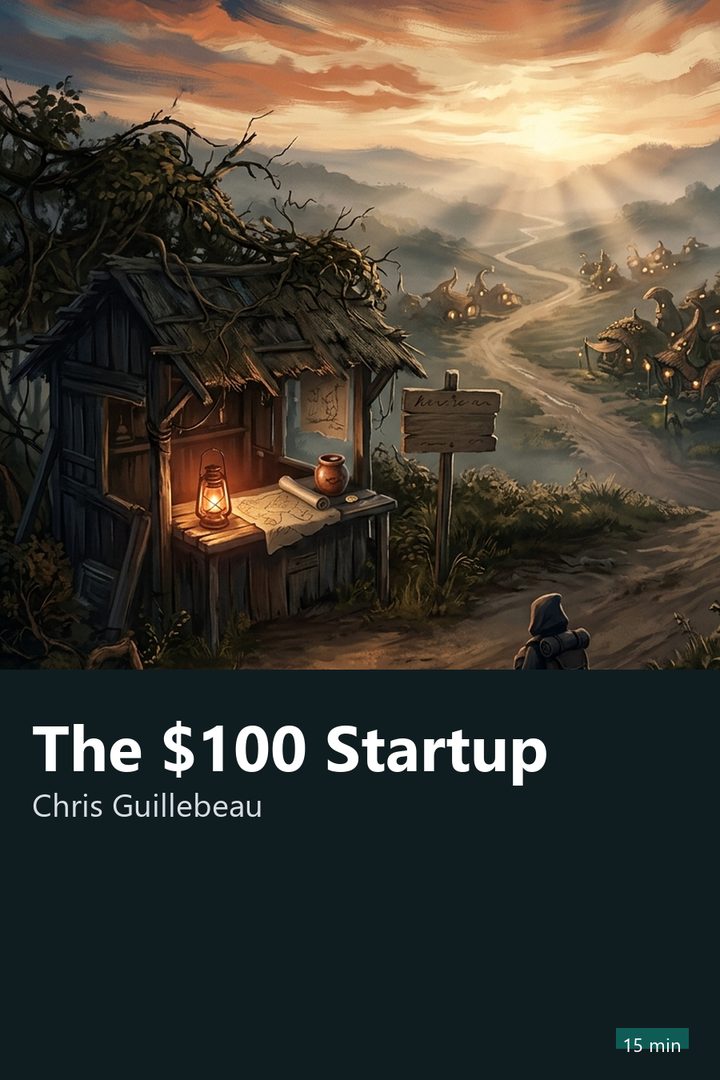
Cover of The $100 Startup

Business · 18 min

The $100 Startup

Chris Guillebeau · 2012

Who it's for

For anyone who wants to test a small business with limited resources, including keeping a day job while learning the ropes. It is especially useful for service providers and professionals looking to turn their knowledge into concrete offers.

Read it in the app

⚡ Free to download • 🎁 One full book free every day

🎧 Audio coming soon in the app

Narration for the English summaries is on its way. Meanwhile you can read the full summary in the app.

3 ideas to take with you

1

A skill gains commercial meaning when it meets a problem that someone considers important to solve.

2

Price can hide unpaid labor when enthusiasm takes the place of doing the math.

3

The right size for a business also depends on the life its owner intends to protect.

“
The customer sees value in the change they receive, not in the effort hidden behind the scenes.
An idea from The $100 Startup, in the words of 15 Minutes

Preview

Start reading now

1. A business can start smaller than you think

Chris Guillebeau offers an alternative to the image of the entrepreneur who needs investors, an office, and a major invention. His focus is on microbusinesses built with limited resources, available knowledge, and direct contact with buyers. The central proposal is to trade away part of the abstract preparation for small experiments capable of generating both income and learning.

The title should not be taken as a guaranteed budget for every type of venture. One hundred dollars represents the possibility of starting with very little, especially in simple services and products. A teacher offering online tutoring has very different requirements from someone planning to open a restaurant in their neighborhood.

For anyone dealing with a exhausting commute and a tight paycheck, the message can bring hope, though it requires caution. Starting small means limiting your potential losses, not impulsively quitting your job. Before betting your family's income, it is worth testing whether someone is actually willing to pay for a specific solution you can deliver.


2. Opportunity appears where skill meets need

The author calls attention to the convergence between what a person knows how to do and what other people want to buy. Enthusiasm helps, but enthusiasm alone does not sustain a business. A venture begins to take shape when a personal capability meets a recognized, important problem for a real audience.

Imagine someone who enjoys organizing spreadsheets and helps coworkers make sense of household expenses. That skill can become a service for small shop owners who struggle to track money coming in and going out. The decisive factor is not loving numbers, but uncovering a concrete need and offering work that matches your own competence.

There are also transferable skills, applied outside the context where they were originally learned. Someone who organized school events may know how to negotiate with vendors, meet deadlines, and coordinate people. Instead of searching for a hidden calling, look at tasks you already do well and investigate which ones solve problems someone would pay to fix today.

3. Value is the change the customer perceives

One of the most important ideas in the book is that value is not the same as the seller's effort. Customers rarely buy your hours of worry or the complexity behind the scenes. They look for a benefit: saving time, reducing effort, feeling secure, learning a skill, or enjoying a better experience in their daily lives.

That distinction changes how an offer is presented. A cook might advertise meal-prep boxes made with select ingredients, while the customer is really buying the peace of mind of eating a good lunch during a hectic workday. Understanding this motivation lets you adjust the menu, packaging, and delivery times without relying solely on praising the product itself.

A value proposition needs to explain this transformation in an understandable way. Instead of presenting a huge list of features, show which headache shrinks and how the delivery works. At the neighborhood diner, a digital menu only makes sense if it makes ordering easier, reduces confusion, or helps the staff work better.

11 more sections and the quiz

Continue in the app

Read the whole summary, finish with the The $100 Startup quiz and follow the guided Journeys. No ads in the app.

About Chris Guillebeau

Chris Guillebeau is an American writer and entrepreneur, born in 1978. He created The Art of Non-Conformity project, dedicated to independent work, travel, and lifestyle choices. He also founded the World Domination Summit, a gathering held in Portland, Oregon. In 2013, he completed his goal of visiting all 193 UN member countries before turning 35.

Explore

Category:
Business
Part of the Journeys:
Career Change